
17 Examples of the Uncanny Valley
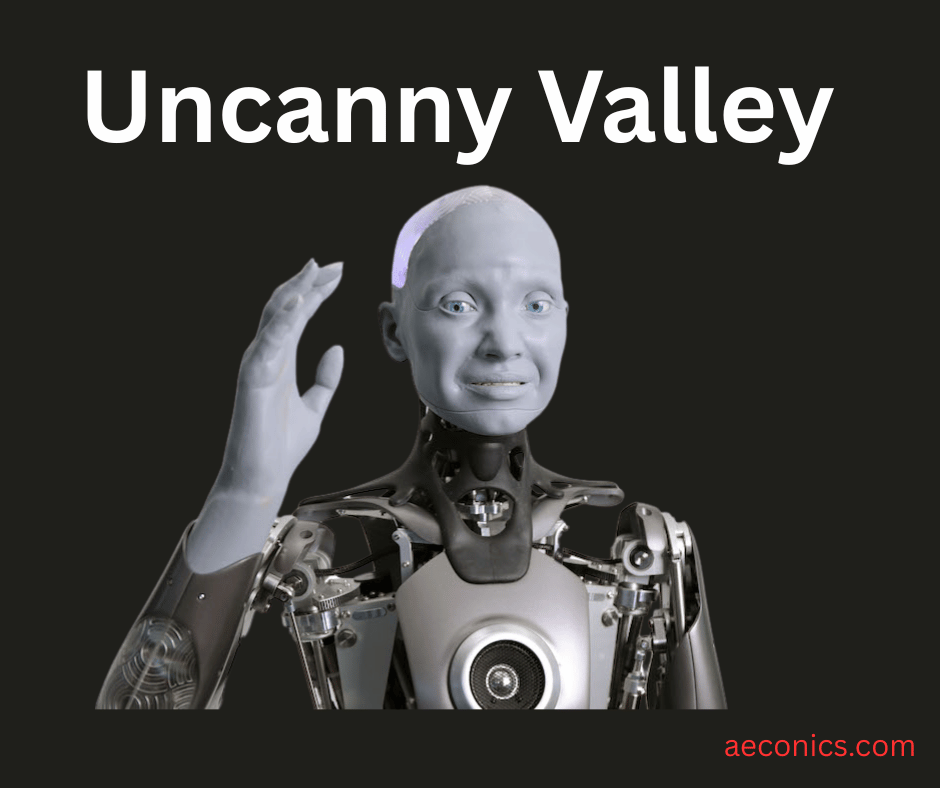
The uncanny valley is the dip in comfort that happens when something artificial becomes almost human. Not human enough to accept, too human to dismiss. Masahiro Mori proposed it in 1970, writing about robots. He could not have anticipated that the clearest examples would arrive on phone screens fifty-five years later.
What makes 2026 interesting is that the valley is being crossed in some places and discovered in others. Here are seventeen examples, with what each one reveals.
AI video: the valley’s new frontier
1. Hands in generated video
The single most reliable giveaway in 2026. Faces have largely been solved; hands have not. Extra fingers, impossible joint angles and flickering between frames remain common, and they get worse in motion.
If you want to test whether a clip is generated, watch the hands during movement rather than the face.
2. The 2023-to-2026 jump
In 2023, AI video was grainy and obviously synthetic — unsettling, but never mistakable for footage. The same prompt in 2026 produces something close to indistinguishable from a real recording.
This is the valley being crossed in real time, which is itself unusual to witness.
3. Sora’s disappearance
Worth noting because so much writing on this topic is now out of date: OpenAI discontinued Sora, closing the app and website on 26 April 2026, with the API sunset following on 24 September 2026.
Sora 2 had set the benchmark for physical realism — objects moving with convincing weight and momentum. Any article still framing the field as “Sora versus Veo” was written before this.
4. Synchronised audio
Google’s Veo 3.1 generates native synced audio — dialogue, ambient sound, foley and music fitted to the scene. Video with wrong-sounding audio sits firmly in the valley; getting both right is what lifts a clip out of it.
5. Each model fails differently
No 2026 model wins everywhere. Veo 3.1 is rated highest for cinematic quality and colour science; Kling 3.0 for human skin, faces and lip-sync; Seedance 2.0 has emerged as the common Sora replacement.
Physics, faces, lighting and audio each favour a different tool. Most 2026 models clear the uncanny-valley bar most of the time — and that qualifier is where the discomfort now lives.
Faces and bodies
6. Realistic video game characters
Games chasing photorealism hit the valley hardest. Stylised characters never do — which is why animation studios that chose stylisation over realism have aged better than those that did not.
7. Dead-eye syndrome
Human eyes constantly make micro-movements called saccades, and the surrounding skin moves with them. Reproduce the eye perfectly but miss the micro-movement and the result reads as a corpse.
8. De-aged actors
The face is young; the way it moves is not. Our perception of age draws on gait and micro-expression as much as skin texture, and digital de-ageing typically fixes only the second.
9. Deepfakes that are nearly right
The ones that unsettle people most are not the obvious fakes. They are the ones where something is wrong and you cannot name it — a blink rate slightly off, a lighting mismatch at the jaw.
10. Hyper-realistic silicone dolls
Mori’s original example, essentially. Perfect at rest, deeply wrong once touched or moved, because the stillness that makes them convincing is also what makes them inhuman.
11. Wax museum figures
A reminder that the valley long predates computers. The failure is the same: correct proportion, absent life.
Movement and voice
12. Humanoid robots that walk
Human walking involves constant small corrections for balance. Robots that move too smoothly read as wrong precisely because they are too smooth — the imperfection is the signal of life.
13. Motion capture without cleanup
Raw mocap transferred to a digital body often produces a figure moving correctly but weightlessly — as though gravity applies to the room and not the character.
14. Synthetic voices with flawless pronunciation
An audio valley exists too. Real speech contains hesitation, breath and inconsistent emphasis. A voice that never stumbles is more unsettling than one that sounds obviously robotic.
15. AI assistants that mirror emotion
A newer and less-discussed example. When a system responds to distress with perfectly calibrated sympathy, many people report discomfort rather than comfort — the response is correct in form and empty in origin.
The valley beyond appearance
16. Writing that is technically perfect
Prose with no errors, no idiosyncrasy and no risk now triggers suspicion in a way it did not five years ago. Readers have developed a detector for competent, characterless text — which is a genuinely new cultural reflex, and one that is reshaping how people write online.
17. Customer service that is almost human
A chatbot that announces itself is fine. One that imitates a person — using a name, apologising warmly, then failing at the first unexpected question — produces the full valley effect, along with a specific kind of irritation at having been fooled briefly.
Why the valley exists
There is no settled explanation. The leading candidates:
- Threat detection. Something that looks human but moves wrongly historically meant illness. Avoidance was adaptive.
- Category confusion. The brain dislikes things that fit no category. The discomfort is the cost of failing to classify.
- Violated expectation. Human appearance creates human expectations; the mismatch registers as wrongness.
All three are plausible. None is proven, and the original 1970 hypothesis remains a hypothesis — widely cited, rarely tested rigorously.
Frequently asked questions
What is the uncanny valley?
The drop in emotional comfort that occurs when something artificial closely resembles a human without quite succeeding. Proposed by roboticist Masahiro Mori in 1970. Comfort rises with realism, falls sharply near human likeness, then recovers at true indistinguishability.
Has AI video escaped the uncanny valley in 2026?
Mostly, and not consistently. Leading 2026 models clear the bar much of the time, but hands remain a common failure point — extra fingers, impossible bends and flickering, especially during motion.
How can I tell if a video is AI-generated?
Watch hands in motion, blink rate, and whether lighting on the subject matches the background. Check for physics inconsistencies — objects without convincing weight. None of these is reliable indefinitely; detection by eye is a shrinking window.
Why do stylised characters avoid the valley?
Because they never claim to be human. The valley requires a near-miss; a clearly stylised character makes no such claim and triggers no comparison.
What happens next
The visual valley is closing. Within a few years, telling generated video from recorded video by eye will not be realistic for most people.
The more interesting question is where the valley reappears. Examples 15 through 17 suggest an answer: not in how things look, but in how they behave. A face that passes and a response that is correct but hollow may turn out to be the harder problem — and the one we have barely started thinking about.
AI video model capabilities and the Sora discontinuation dates are from technology industry reporting published in 2026; most are secondary blog and vendor sources rather than independent testing, so model rankings should be treated as rough. The uncanny valley hypothesis originates with Masahiro Mori (1970) and remains debated. Last reviewed: October 2026.

Enugula Suchitra
Suchitra Enugula is a contributor at Aeconics, writing about technology, business, education, digital trends, and practical online topics. Her content is designed to help readers understand changing digital tools, emerging trends, and useful information in a clear and accessible way. At Aeconics, Suchitra covers technology updates, business insights, educational topics, digital platforms, and how-to guides. Her goal is to provide helpful, well-structured content that makes complex subjects easier to explore and apply. Follow Suchitra Enugula on Aeconics for informative articles, practical guides, and fresh perspectives on technology and the digital world.